Previous
Next
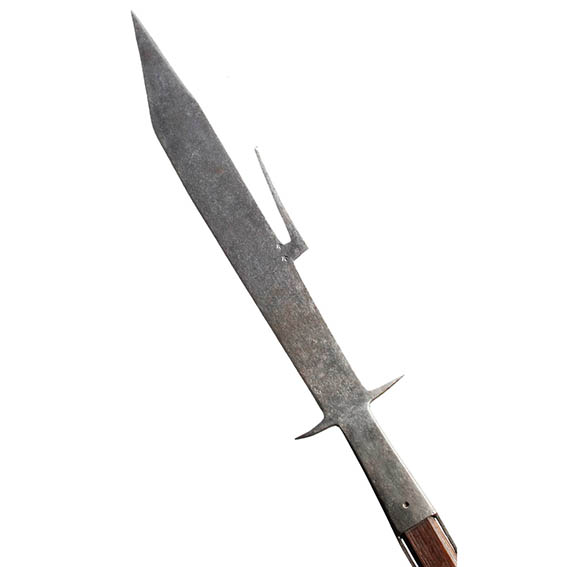
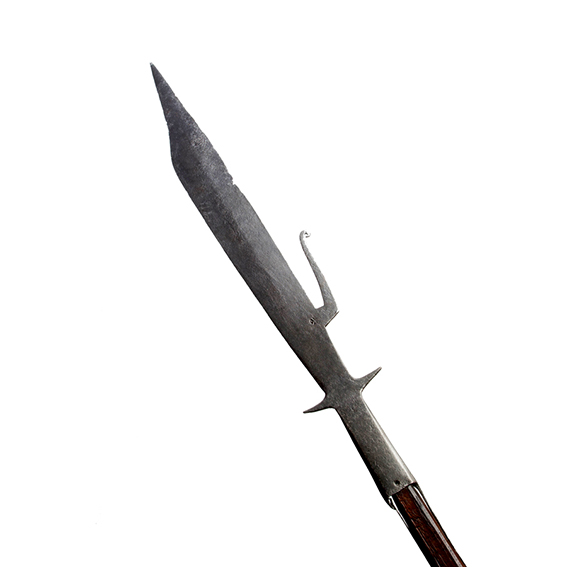
Glaive
The glaive developed from a weapon called the couse or vouge in French or the Kuse in German. It has a long single-edged blade and a sickle-shaped extension or protrusion on the back, for parrying and hooking onto an enemy’s weapon. In its original blade form the glaive was very similar to an agricultural tool and thus its function was described as such. However, in the period of transition from the Renesissance to the Baroque the glaive’s form acquired more combat elements.